Introduction to the 2026 Chemical Industry Outlook
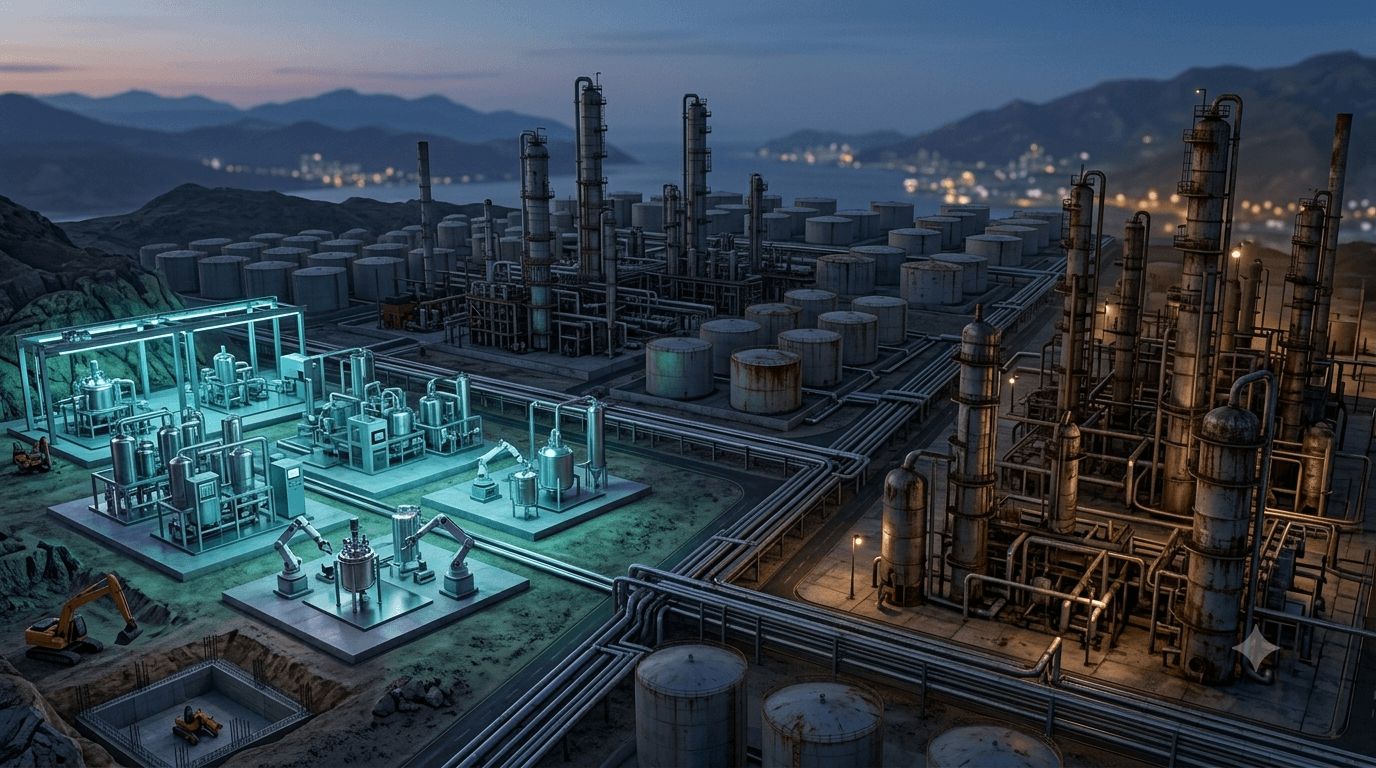
The chemical industry outlook for 2026 is marked by a paradox of rapid technological adoption and persistent structural challenges. While artificial intelligence (AI) is unlocking new efficiencies, the sector continues to grapple with overcapacity in traditional commodity chemicals and a shifting competitive balance between Europe, China, and emerging markets.
AI as a Game‑Changer for "AI Chemicals"
AI is no longer a buzzword; it is becoming the backbone of modern chemical manufacturing. Companies are deploying machine‑learning algorithms to predict reaction outcomes, optimize feedstock usage, and reduce energy consumption. This transformation is giving rise to a new category often termed "AI chemicals," where product design and process control are co‑created by humans and intelligent systems.
Key Applications
Predictive modeling for polymer properties, shortening development cycles from months to weeks.
Real‑time process monitoring that cuts waste and improves safety.
Supply‑chain analytics that align production with fluctuating demand, mitigating overcapacity risks.
Enterprises that integrate AI early are seeing margin improvements of 3‑5% and a stronger foothold in high‑value specialty markets.
Regional Divergence: Europe vs. China
Geography continues to shape the chemical markets 2026. Europe, traditionally a hub for specialty chemicals, is tightening environmental regulations and investing heavily in circular economy initiatives. In contrast, China remains the world’s largest producer of commodity chemicals, but its growth is now constrained by stricter government policies on emissions and resource efficiency.
European Chemicals Landscape
European firms are leveraging sustainability as a competitive advantage. The EU Green Deal and REACH updates are pushing companies toward bio‑based feedstocks, renewable energy, and closed‑loop recycling. As a result, the European specialty chemicals sector is projected to grow at 4% annually, outpacing the global average.
China Chemicals Landscape
China’s chemical output is still massive, yet the country faces a dual challenge: reducing overcapacity in commodity lines while moving up the value chain. Government incentives for high‑tech and green chemicals are encouraging a gradual shift toward specialty and performance chemicals, but the transition will take several years.
Overcapacity in Commodity Chemicals
Overcapacity remains a thorn in the side of the global chemical industry. Excess production of basic polymers, fertilizers, and basic petrochemicals has compressed margins, forcing consolidation and plant closures. Analysts predict that without significant demand growth or capacity reductions, the commodity segment will see average annual price declines of 2‑3% through 2026.
Strategic Responses
Asset rationalization – selling or repurposing under‑utilized plants.
Vertical integration – securing feedstock supply to improve cost control.
Shift to higher‑margin specialty products – leveraging existing infrastructure for niche applications.
Sustainability and the Rise of Specialty Chemicals
Sustainability is no longer a compliance checkbox; it is a market driver. Customers across automotive, electronics, and consumer goods are demanding greener formulations, driving the expansion of the specialty chemicals market. Bio‑based polymers, low‑VOC adhesives, and recyclable coatings are among the fastest‑growing segments.
Growth Metrics
Global specialty chemicals sales are forecast to reach $1.2 trillion by 2026.
Europe accounts for roughly 35% of this growth, while Asia‑Pacific contributes 30%.
Companies that achieve a 20% reduction in carbon intensity can command price premiums of up to 8%.

Isopropyl Alcohol (IPA) (99.7%) - China CAS: 67-63-0