Introduction
Indonesia’s frozen and shelf-stable food market has expanded rapidly over the last decade, driven by urbanization, busy lifestyles, and the growth of modern retail and foodservice chains. Consumers in Jakarta, Surabaya, Medan, and other major cities increasingly rely on frozen dumplings, nuggets, ready-to-heat rice dishes, and retorted ready meals that are convenient yet still deliver appealing texture and consistent quality. Behind these products is a careful selection of functional ingredients, especially starches and hydrocolloids, that protect texture through freezing, thawing, and high-heat processing.
Potato starch has become a key functional ingredient in this context due to its clean taste, high viscosity, and excellent freeze–thaw performance. When combined strategically with food gums such as guar gum, xanthan gum, carrageenan, and locust bean gum, potato starch can deliver superior stability and texture in both frozen and retorted products. This synergy is particularly valuable for Indonesian manufacturers seeking to optimize cost, maintain halal compliance, and meet increasingly strict quality expectations.
Suppliers such as foodadditivesasia.com support regional manufacturers by providing tailored blends of potato starch and gums, technical guidance, and application support. By understanding how these ingredients interact at a molecular level, research and development (R&D) teams can design formulations that withstand cold-chain fluctuations, retort sterilization, and long distribution distances across the Indonesian archipelago while preserving product integrity and consumer appeal.
Understanding Potato Starch and Food Gums in Modern Formulation
Potato starch is characterized by its large granule size, high amylopectin content, and strong water-binding capacity. These properties allow it to develop high viscosity at relatively low concentrations and provide a smooth, short-textured mouthfeel. Unlike some cereal starches, potato starch typically offers a neutral flavor and bright, clean appearance, which is important for products such as clear sauces, gravies, and transparent fillings. Its relatively good freeze–thaw stability makes it suitable for frozen foods that are repeatedly cycled through cold storage and reheating.
Food gums, also known as hydrocolloids, are polysaccharides that hydrate in water to form viscous solutions or gels. Common gums used in Indonesia include guar gum (often used in frozen desserts and bakery), xanthan gum (for sauces and dressings), carrageenan (for meat and dairy systems), and locust bean gum (for synergistic gel systems). Each gum has specific hydration requirements, ionic sensitivities, and rheological profiles. When used alone, they can enhance viscosity, improve suspension, and reduce syneresis, but they may also create overly elastic or slimy textures if not balanced properly.
The modern approach in R&D is not to rely on a single texturizer but to create a synergistic system where potato starch provides bulk viscosity and body while gums fine-tune stability, water distribution, and process tolerance. Technical distributors such as foodadditivesasia.com often propose customized systems where the ratio of starch to gums is optimized for specific applications—such as frozen sauces, retorted curries, or shelf-stable soups—taking into account local raw materials, equipment, and processing conditions used by Indonesian manufacturers.
Synergy Mechanism: Potato Starch with Gums in Frozen Products
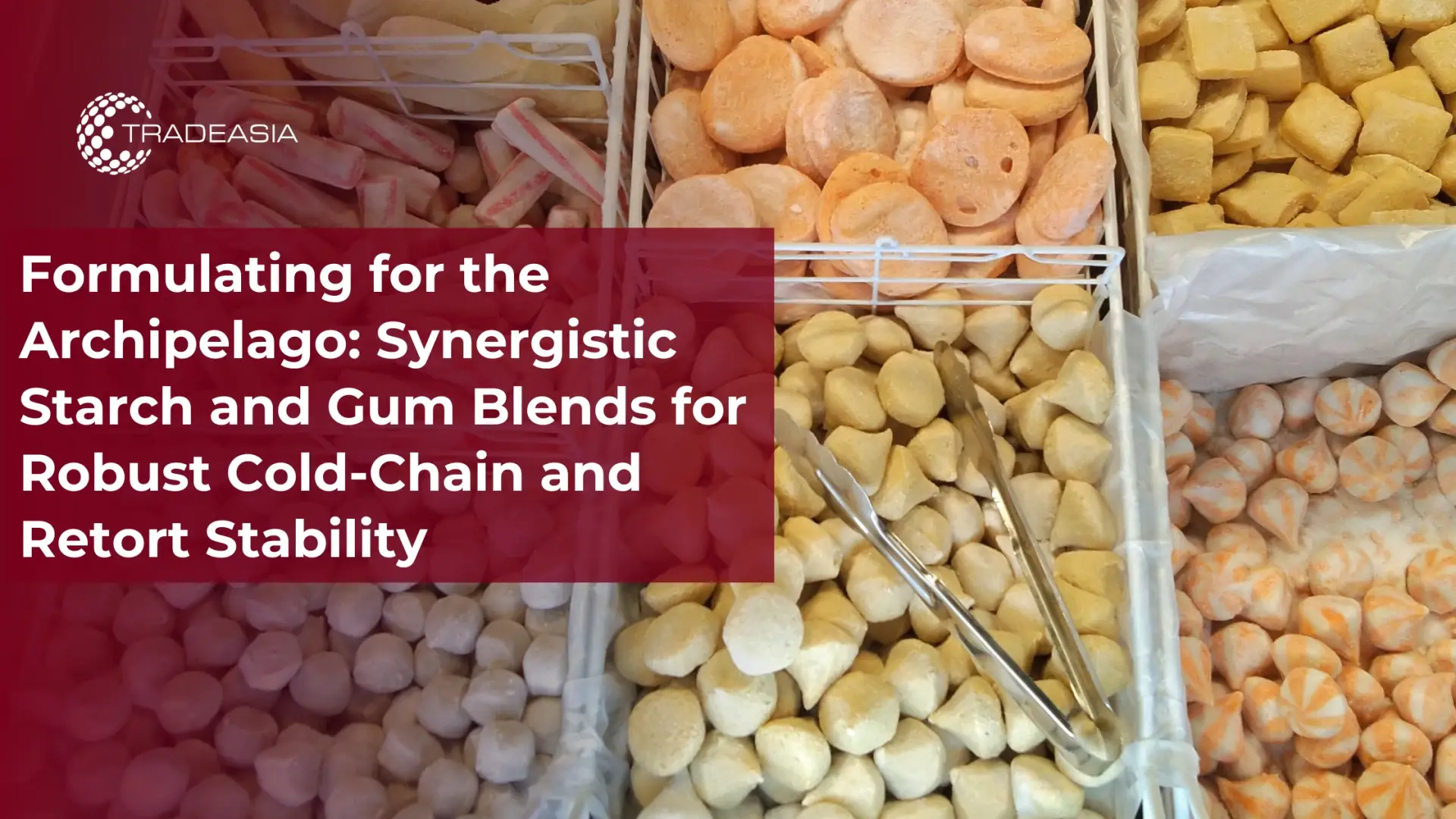
In frozen products, the main technical challenges are ice crystal formation, moisture migration, and texture degradation after thawing and reheating. When water freezes, ice crystals can puncture starch gel networks, leading to syneresis (water separation) and a grainy or rubbery texture. Potato starch, with its high swelling capacity, forms a relatively strong yet flexible gel matrix. However, under severe freeze–thaw cycles—common in Indonesia’s fragmented cold chain—potato starch alone may not fully prevent water separation in delicate systems such as frozen gravies, sauces, and fillings.
By combining potato starch with small amounts of xanthan gum or guar gum, formulators can significantly improve freeze–thaw stability. Gums bind free water more effectively and increase the viscosity of the unfrozen phase, reducing the mobility of water molecules and limiting the growth of large ice crystals. For example, a frozen chicken nugget sauce or bumbu coating can maintain a glossy, cohesive texture after storage at -18 °C and subsequent reheating when it uses a potato starch–xanthan gum system instead of starch alone. Studies in global markets have shown that starch–gum combinations can reduce syneresis by 30–50% compared with single-component systems.
For Indonesian frozen foods such as frozen bakso, siomay, and frozen ready-to-eat rice dishes, the synergy is also important for maintaining juiciness and bite. A combination of potato starch and carrageenan or guar gum in meat or fish analogues helps retain moisture during both freezing and frying. Suppliers like foodadditivesasia.com often recommend specific blends with defined viscosity (e.g., 3,000–6,000 cP at given shear and temperature) tailored to local processing lines. This enables manufacturers to achieve consistent batter pickup, reduce oil uptake, and improve yield while ensuring the final product remains tender and moist after consumer preparation in home kitchens or foodservice outlets.
Synergy Mechanism: Potato Starch with Gums in Retorted Products
Retorted products—such as canned soups, ready-to-eat curries, and shelf-stable rice dishes—undergo high-temperature, high-pressure sterilization, often reaching 121 °C or higher. This intense thermal treatment can break down starch granules, thin viscosity, and cause phase separation over shelf life. Potato starch provides high initial viscosity, but under prolonged retort conditions, some degradation is inevitable. The challenge is to design a texture system that remains stable during processing and throughout 12–24 months of ambient storage, which is typical for retorted products distributed across Indonesia’s diverse climate zones.
Gums such as xanthan gum and carrageenan are more thermally stable than starch and can maintain viscosity even after severe heat treatment. When used in synergy with potato starch, they create a dual structure: the starch granules provide body and opacity, while the gum network supports viscosity and prevents separation of solids (e.g., meat particles, vegetables, spices). In a retorted rendang or gulai sauce, a potato starch–xanthan system can keep oil and water phases more homogeneously dispersed, minimizing creaming or oiling-off during storage at ambient temperatures common in Indonesia, often above 30 °C.
Another key benefit of starch–gum synergy in retorted foods is improved shear stability. During pumping, filling, and agitation in retort baskets, the formulation experiences mechanical stress that can break down starch-only systems. A carefully calibrated blend, such as a potato starch with low-level xanthan gum as supplied by foodadditivesasia.com, provides a more pseudoplastic flow: high viscosity at rest (for suspension and mouthfeel) but lower viscosity under shear (for easy pumping and filling). This rheological behavior enhances line efficiency, reduces equipment wear, and ensures that products such as retorted soto, kari ayam, or sayur lodeh retain a uniform, appealing texture from the first to the last can or pouch.
Benefits and Applications for Indonesian Food Manufacturers
For Indonesian manufacturers, the synergy of potato starch and gums translates into concrete business benefits: improved product stability, higher yield, and reduced waste. Enhanced freeze–thaw and heat stability allow products to better tolerate distribution challenges across islands, from Java and Sumatra to Kalimantan and Sulawesi. Fewer texture failures and less syneresis mean fewer consumer complaints and product returns. At the same time, optimized starch–gum systems can reduce overall usage levels compared with using only starch or only gums, improving cost-in-use while maintaining or even upgrading sensory quality.
Application-wise, potato starch–gum systems are highly relevant for popular Indonesian categories such as frozen ayam goreng marinades, bumbu-coated seafood, frozen dim sum, frozen soto and bakso soups, as well as retorted rice meals, canned curries, and ready-to-eat traditional dishes. For example, a frozen nasi goreng ready meal can use a potato starch–guar gum blend to keep rice grains separate yet moist after microwave reheating, while a retorted opor ayam pouch can rely on a potato starch–xanthan–carrageenan system to maintain a rich, creamy sauce without phase separation. These solutions support both large-scale manufacturers supplying modern trade and smaller producers scaling up for export.
Technical partners like foodadditivesasia.com play a central role by offering not only raw materials but also application-specific systems and R&D collaboration. They can provide pre-tested blends optimized for viscosity, pH range, and processing conditions typical in Indonesian plants, as well as guidance on hydration sequence, mixing conditions, and labeling considerations. This reduces development time and risk for manufacturers, allowing them to respond quickly to new market trends such as plant-based frozen meals, premium ready-to-eat Asian dishes, and healthier, clean-label formulations that still rely on familiar ingredients like potato starch and widely accepted hydrocolloids.
Conclusion
The combination of potato starch and food gums offers a powerful toolset for Indonesian food manufacturers aiming to deliver high-quality frozen and retorted products. By leveraging the bulk viscosity and clean sensory profile of potato starch together with the stabilizing, water-binding, and heat-resistant properties of hydrocolloids, formulators can overcome common challenges such as freeze–thaw damage, syneresis, and viscosity loss during retort processing. This synergy results in products that are more stable, visually appealing, and enjoyable to eat—even after long storage and complex distribution routes.
As Indonesia’s food market continues to evolve, with rising demand for convenient, safe, and premium-quality ready meals, the role of advanced ingredient systems will only grow. Working with specialized suppliers such as foodadditivesasia.com, manufacturers can access tailored potato starch–gum solutions, technical expertise, and ongoing R&D support. This collaboration enables them to optimize cost, strengthen product performance, and maintain a competitive edge both in the domestic market and in export channels across Asia and beyond.
By understanding the science of starch–gum interactions and translating it into practical formulations, Indonesian R&D teams can create frozen and retorted foods that consistently meet consumer expectations for taste, texture, and reliability. In an increasingly demanding marketplace, the strategic use of potato starch and gums is not just a technical choice—it is a key component of long-term product and brand success.