Introduction
In modern industrial operations, the consistent dissolution of chemicals in water is essential for efficiency, process control, and product quality. Soda Ash Dense, also known as dense sodium carbonate (Na2CO3), is a critical industrial chemical used in water softening, pH regulation, glass manufacturing, chemical production, and pulp and paper processing. Its performance in aqueous solutions directly affects operational reliability and the effectiveness of downstream processes.
Understanding how Soda Ash Dense dissolves in water enables plant operators, engineers, and procurement specialists to optimize chemical dosing, reduce waste, and maintain consistent quality. Sourcing high-quality Soda Ash Dense from trusted suppliers such as Chemtradeasia ensures standardized material, predictable performance, and sustainable industrial operations.
How Soda Ash Dense Dissolves in Water
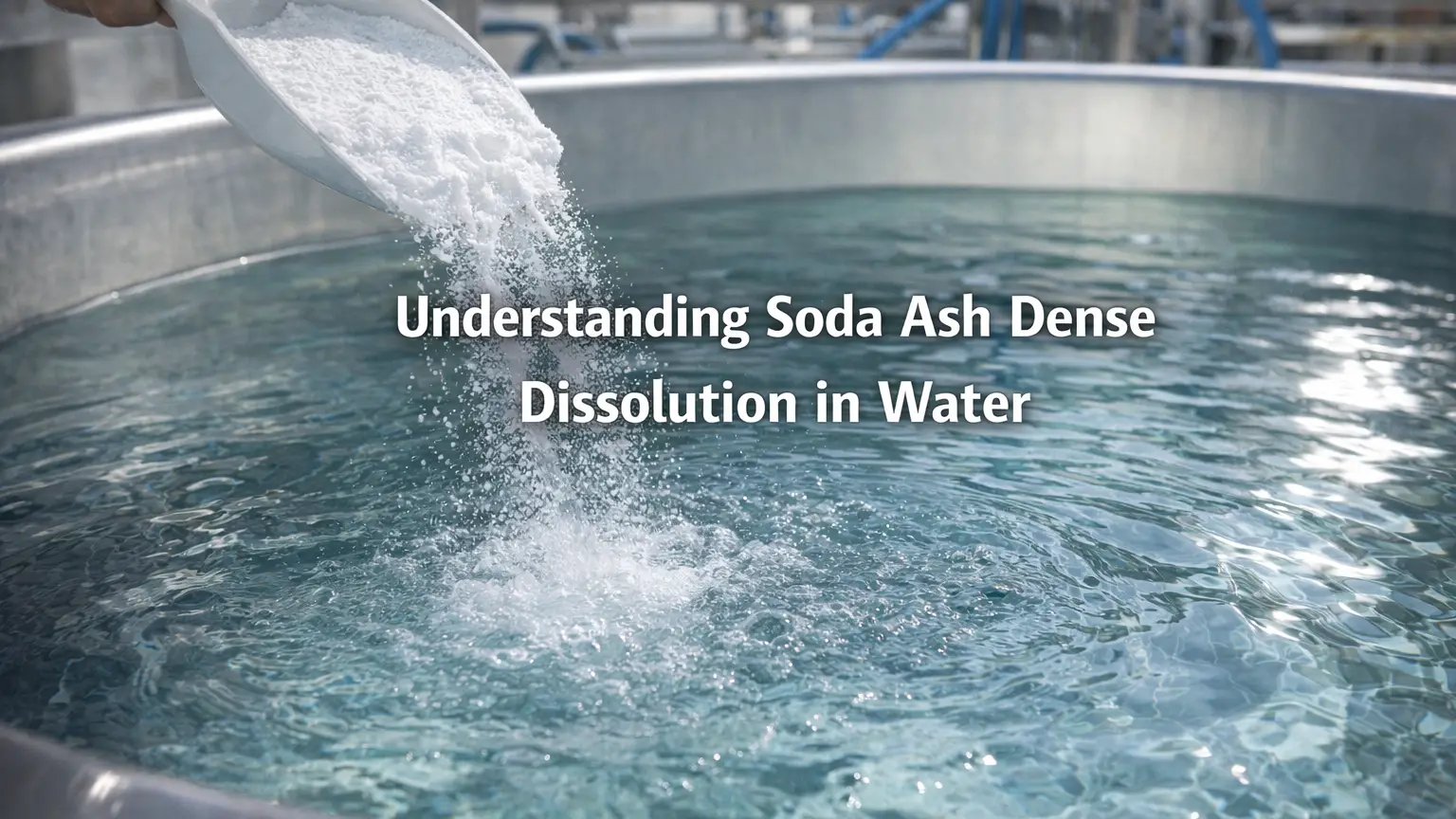
Dissolution occurs when solid Soda Ash Dense granules disperse at the molecular level, forming a uniform alkaline solution. Sodium carbonate is highly soluble, with solubility increasing with temperature, from around 7 grams per 100 milliliters at 0°C to 45.5 grams per 100 milliliters at 100°C. Water molecules surround sodium (Na+) and carbonate (CO3²) ions, separating them from the crystal lattice. Carbonate ions then interact with water, producing bicarbonate (HCO3) and hydroxide (OH) ions that raise pH. This alkalinity is central to most industrial applications, whether for pH adjustment, hardness removal, or chemical synthesis.
The rate at which Soda Ash Dense dissolves depends on several factors, including particle size, water temperature, agitation, and water quality. While dense soda ash granules dissolve more slowly than light soda ash powders, their controlled solubility provides operational advantages, including predictable dosing, reduced dust, and ease of handling in high-volume systems.
Key Properties and Specifications
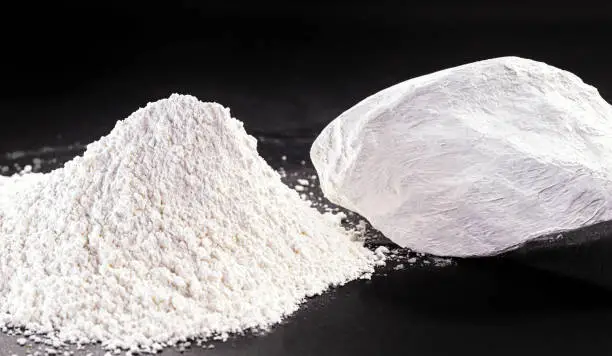
Soda Ash Dense differs from light soda ash in several critical ways. Its bulk density ranges from 0.95 to 1.15 grams per cubic centimeter, significantly higher than light soda ash, which improves flowability through hoppers and feeders while reducing airborne dust. The granules are larger, typically above 150 microns, which ensures gradual and controlled dissolution, ideal for industrial-scale continuous dosing. Chemically, Soda Ash Dense usually contains 99.5 percent or more sodium carbonate, with minimal impurities such as chlorides, iron, or sulfates, ensuring consistent process performance. Its lower hygroscopicity compared with light soda ash reduces caking during storage, further supporting predictable dissolution in industrial operations.
Factors Affecting Dissolution Rate
Temperature, agitation, particle size, water quality, and the method of addition all influence how quickly Soda Ash Dense dissolves. Higher water temperatures accelerate solubility, making it possible to prepare more concentrated solutions in less time. Pre-warming water to between 40 and 60 degrees Celsius often reduces mixing duration for stock solutions. Mechanical agitation prevents clumping, promotes uniform solute-solvent contact, and avoids stagnant layers that slow dissolution. Particle size is also key; finer powders dissolve faster but generate more dust, whereas larger dense granules offer controlled solubility and safer handling for large-scale operations. Hard water may form surface precipitates on soda ash, slightly slowing dissolution, while soft water provides optimal conditions. Gradually adding soda ash under continuous stirring ensures even distribution, prevents foaming, and improves dissolution efficiency.
Industrial Applications
The dissolution behavior of Soda Ash Dense directly influences performance across multiple industries.
- Glass Manufacturing: Dissolved sodium carbonate lowers the melting temperature of silica, reduces furnace energy consumption, and ensures uniform molten glass quality.
- Water Treatment: Precise pH adjustment and hardness reduction rely on the solubilized carbonate ions to precipitate calcium and magnesium, preventing scale formation.
- Chemical Production: Soda Ash Dense serves as a feedstock for sodium bicarbonate, sodium silicate, and other derivatives.
- Pulp and Paper: Stable alkalinity is required for bleaching and other chemical processes, which is achieved through controlled soda ash dissolution.
- Flue Gas Desulfurization: In power plants, dissolved soda ash reacts with sulfur dioxide to reduce air emissions efficiently, often surpassing the performance of lime-based systems.
Across all applications, consistent dissolution ensures accurate dosing, stable processes, and high-quality output.
Sourcing and Quality Assurance
The effectiveness of Soda Ash Dense depends heavily on consistent quality. Variations in particle size, chemical purity, and moisture can impact dissolution and process performance. Chemtradeasia connects industrial operators with certified suppliers who provide batch-to-batch consistency, technical documentation, and certificates of analysis. This allows operators to formulate precise dosing systems, minimize process disruptions, and ensure compliance with environmental and safety standards. Reliable sourcing from trusted suppliers reduces operational risk and maximizes efficiency across industrial applications.
Conclusion
While dissolving Soda Ash Dense in water may appear simple, its chemical and physical properties, along with proper handling, have a significant impact on industrial performance. Controlled solubility, high purity, and predictable alkalinity make it indispensable in water treatment, glass manufacturing, chemical production, pulp and paper processing, and flue gas desulfurization.
Understanding the principles of dissolution, following best operational practices, and sourcing from trusted suppliers like Chemtradeasia enables industries to optimize efficiency, reduce waste, ensure safety, and maintain consistent product quality. Mastering Soda Ash Dense handling and dissolution is not just a technical necessity but a strategic advantage in competitive, process-driven industries.
For industrial operators seeking reliable, high-quality Soda Ash Dense, Chemtradeasia offers access to vetted global suppliers, transparent specifications, and technical support to ensure optimal performance in every application.