Understanding the Classic Chemical Inventory Cycle
In the petrochemical and specialty chemicals arena, price volatility is rarely random. It follows a predictable rhythm known as the chemical inventory cycle. The cycle typically unfolds in eight steps:
- Low prices trigger buyers to destock and reduce on‑hand inventories.
- Accelerated destocking amplifies perceived demand weakness, pushing prices even lower.
- Producers react by cutting output or postponing maintenance turnarounds.
- With supply constrained, prices begin to stabilise and eventually recover.
- Buyers, now facing tighter supplies, rush to restock, creating a sudden spike in apparent demand.
- Prices jump sharply as the market absorbs the surge.
- Manufacturers ramp up capacity, often adding new runs or accelerating projects.
- The cycle repeats as inventories swell again.
Recognising which phase a commodity occupies is a core competency of inventory management chemicals professionals. It informs everything from contract timing to hedge positioning.
2026: A Year of Unprecedented Disruption
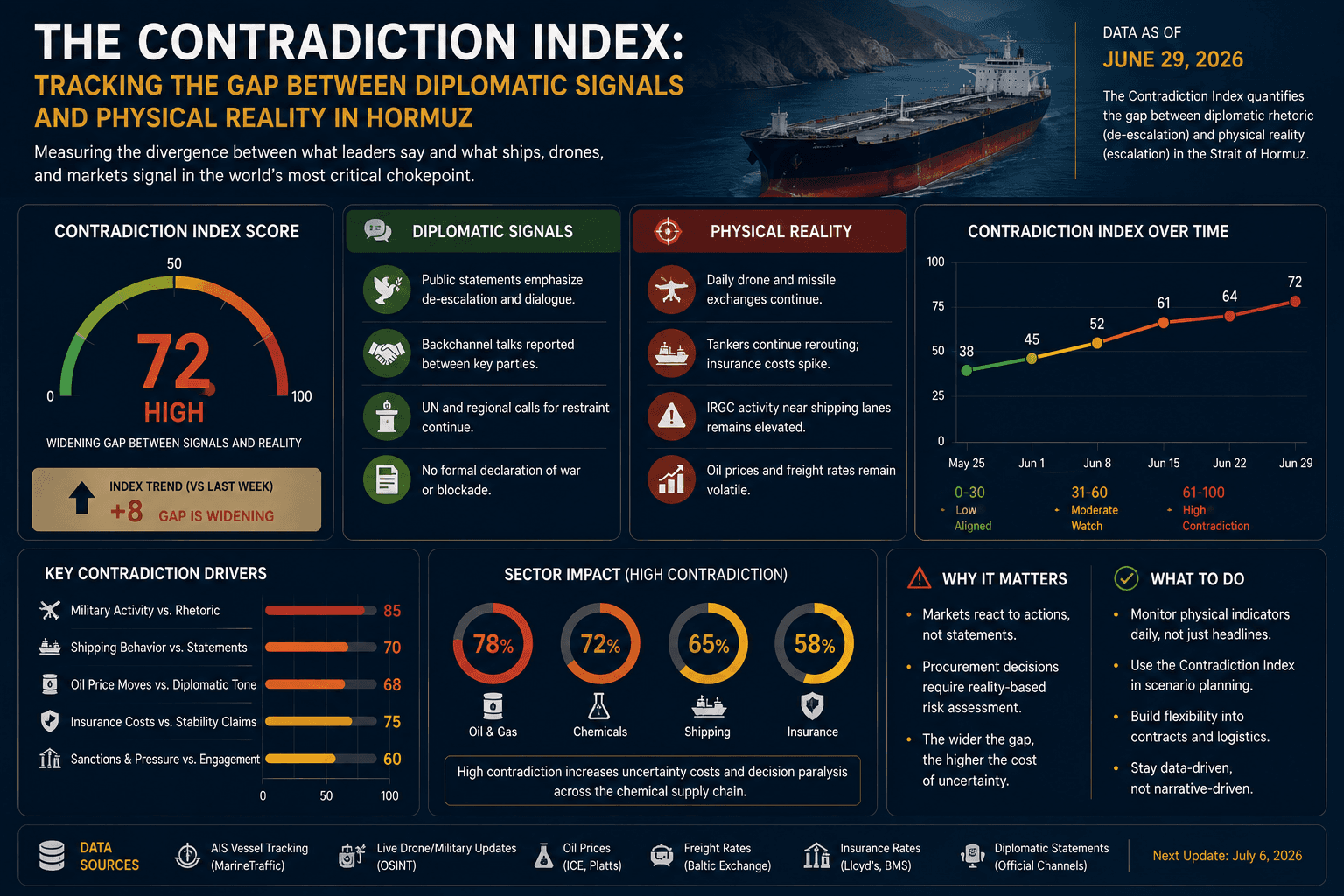
The classic rhythm was violently interrupted in 2026 when the Hormuz Strait— a critical chokepoint for Middle‑East crude and feedstock—experienced a geopolitical crisis. Shipping delays and temporary bans forced downstream users to undertake emergency restocking of three key commodities simultaneously:
- Methanol: essential for formaldehyde, MTBE and emerging green fuels.
- Urea: a staple nitrogen fertilizer with tight seasonal demand.
- Polyethylene (PE): the world’s most produced polymer, feeding packaging, construction and infrastructure.
Because the disruption hit all three at once, the usual staggered cycle phases collapsed into a single, sharp surge in stock levels petrochemicals demand. Prices spiked 30‑45% within weeks, and many buyers faced forced procurement at premium rates.
Lithium Carbonate: A Parallel Speculative Build‑Up
While the Hormuz event drove a physical shortage, lithium carbonate experienced a different kind of inventory pressure. Two unrelated policy moves—China’s adjustment of its VAT rebate for battery‑grade chemicals and Zimbabwe’s sudden export ban on spodumene—created a climate of fear‑buying among Asian battery manufacturers.
The result was a rapid, speculative accumulation of lithium carbonate stocks, even as actual demand remained steady. This illustrates how chemical market demand cycles can be decoupled from physical supply constraints and instead be driven by policy and geopolitical signals.
Key Indicators for Procurement Professionals
To navigate these fluctuations, procurement teams should monitor a blend of quantitative and qualitative signals:
- Warehouse Utilisation Rates: A sudden rise above 80% often precedes a restocking wave.
- Freight Spot Rates: Spike in tanker or container rates can signal upstream bottlenecks.
- Policy Announcements: VAT changes, export bans, or sanctions instantly affect speculative behaviour.
- Seasonal Consumption Patterns: Fertilizer cycles, construction peaks, and holiday packaging demand are predictable anchors.
Integrating these data points into a real‑time dashboard empowers faster, more accurate procurement inventory planning.
Strategic Responses to Cycle Shifts
When a commodity is identified in the destocking phase, buyers can secure lower prices through longer‑term contracts or volume‑based discounts. Conversely, during the restocking surge, strategies shift toward:
- Leveraging spot purchases before price spikes become entrenched.
- Activating price‑risk hedges such as futures or options where liquid markets exist.
- Exploring alternative feedstocks (e.g., bio‑based methanol) to diversify supply.
- Negotiating priority access with producers who are scaling capacity.
For speculative builds like lithium carbonate, the prudent move is to maintain a balanced buffer stock rather than chase market‑driven price hikes that may reverse once policy clarity returns.
Long‑Term Outlook: Global Chemical Supply Balance
Looking beyond 2026, three macro‑trends will shape the global chemical supply balance and, by extension, inventory cycles:
- Decarbonisation Pressures: Shifts toward green hydrogen and bio‑based polymers will re‑configure feedstock demand curves.
- Geopolitical Realignment: New trade corridors (e.g., Red Sea‑Europe pipelines) aim to reduce dependence on chokepoints like Hormuz.
- Digital Supply‑Chain Visibility: Advanced analytics and AI‑driven forecasting will tighten the feedback loop between inventory levels and market pricing.
Companies that embed these insights into their industrial chemical storage strategies—optimising tank farm utilisation, adopting modular storage solutions, and investing in predictive analytics—will gain a decisive edge.
Practical Checklist for Chemical Buyers
Use the following quick checklist to assess where a product sits in its inventory cycle and decide on the appropriate action:
- Check current stock‑to‑usage ratio against historical averages.
- Review recent price trend over the past 3‑6 months.
- Identify any external shocks (political, regulatory, logistical) affecting supply.
- Determine if the commodity is in a destocking or restocking phase.
- Choose a procurement tactic: long‑term contract, spot buy, or hedge.
- Document the decision and set a review date for the next cycle shift.
By systematically applying this framework, buyers can turn the inherent volatility of chemical markets into a strategic advantage.
Conclusion
The 2026 Hormuz crisis and the lithium carbonate speculative surge underscore a vital lesson: inventory cycles are not static. They are highly sensitive to geopolitical events, policy shifts, and market sentiment. Mastering inventory management chemicals—through vigilant monitoring, data‑driven forecasting, and agile procurement tactics—ensures that firms remain resilient amid the inevitable ebb and flow of the chemical market.