Related Insights

Global Chemical Production: What the IMF's 2026 Regional Economic Outlook Means for Chemical Supply Chains
The IMF's April 2026 Regional Economic Outlook highlights the strategic importance of the Strait of Hormuz to global oil, helium, sulfur, ammonia and petrochemical feedstock flows. Chemical procurement teams can use this multilateral data to strengthen supply chain risk assessments and executive decision making.

AIS Data vs Headline Status: Why Strait of Hormuz "Closure" Claims Can Mislead Chemical Supply Chains
Headline reports often describe the Strait of Hormuz as closed during periods of military escalation, but AIS vessel tracking frequently tells a different story. This analysis explains why chemical traders and procurement teams should rely on verified shipping movements instead of political rhetoric when managing logistics, sourcing and freight risk.
China Chemical Watch: Gulf Competition Returns — Beijing's Industry Policy Response
China became the world's swing supplier during the Hormuz crisis, filling global supply gaps across commodity and specialty chemicals. As Gulf exports recover in H2 2026, Beijing is strengthening domestic chemical manufacturing while international buyers shift toward balanced multi-origin sourcing strategies.
Chemical Logistics Digital Tools: AIS, PortWatch, and Real-Time Tracking in the Hormuz Era
The Hormuz crisis has transformed digital maritime intelligence from a competitive advantage into an operational necessity. Chemical supply chain managers are increasingly relying on real-time vessel tracking and analytics to support procurement and logistics decisions.
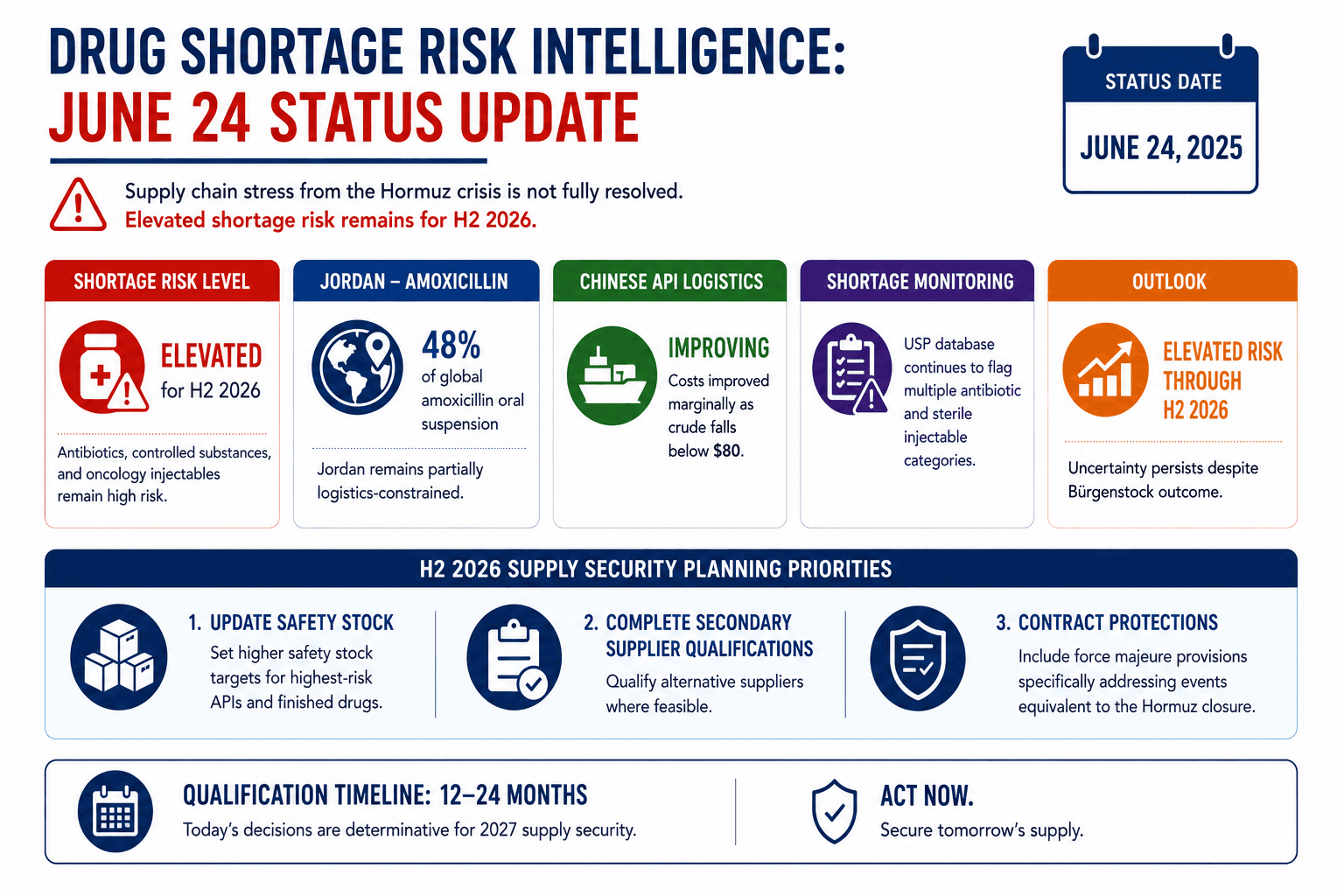
Drug Shortage Risk Intelligence: June 24 Status Update
Drug shortage risk remains elevated in H2 2026 despite easing Hormuz tensions. Pharmaceutical procurement teams should prioritize safety stock updates, secondary supplier qualification, and stronger force majeure protections to secure supply continuity into 2027.
Methanol Markets React to Bürgenstock: Can Prices Correct If Hormuz Flows Restore?
Methanol markets have experienced some of the most severe disruptions during the Hormuz crisis due to their heavy dependence on Gulf export routes. As signs of supply normalization emerge after the Bürgenstock agreements, buyers and producers must reassess Q3 pricing expectations and procurement strategies.
Don't miss out on our updates! Subscribe to our newsletter now
We're committed to your privacy. Tradeasia uses the information you provide to us to contact you about our relevant content, products, and services. For more information, check out our privacy policy.